
KNX Telegram Monitoring Basics
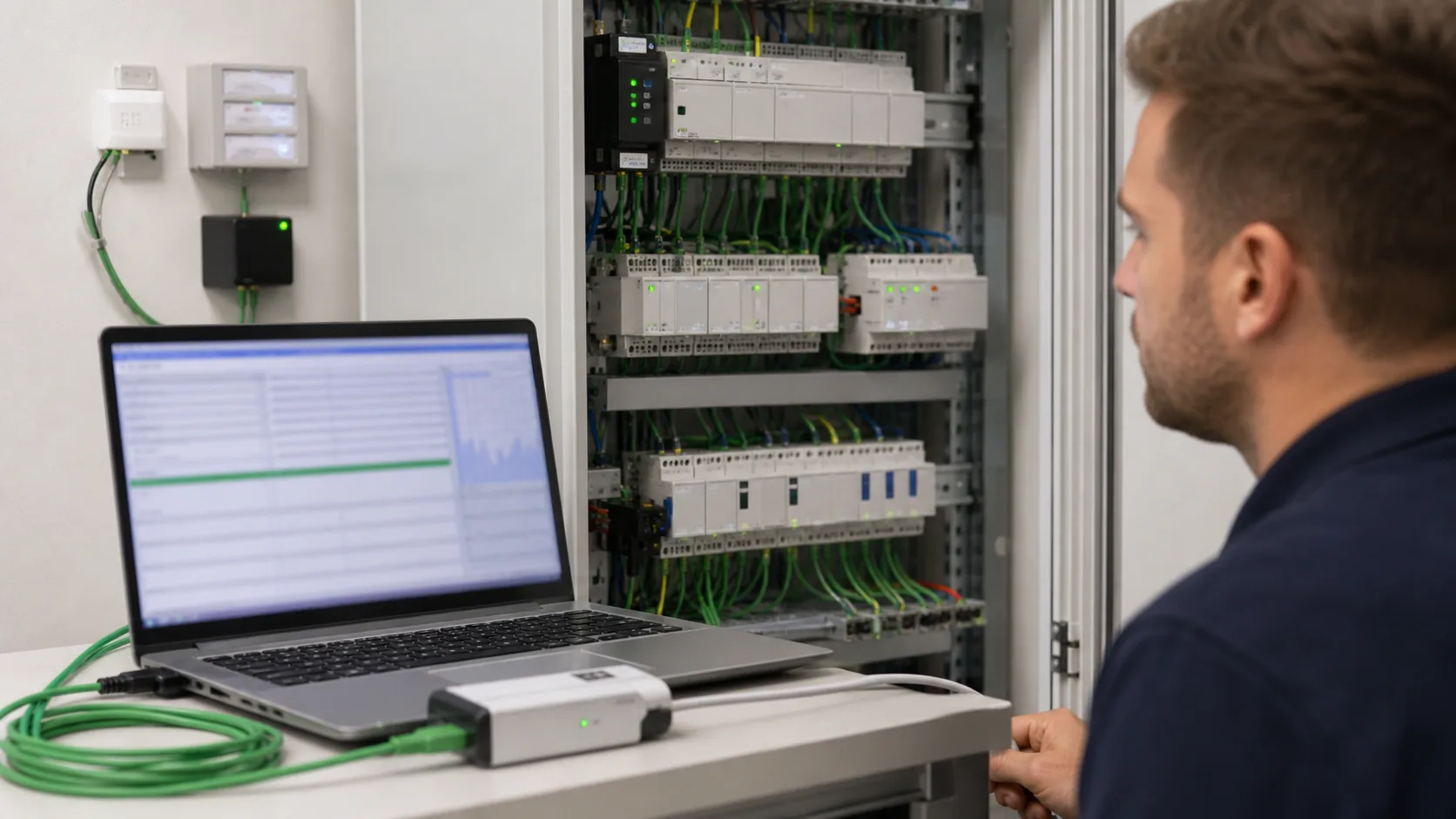
Use telegram monitoring to diagnose group address behavior, timing issues, missing feedback, repeated commands, and integration problems.
Why This Topic Deserves Attention
Use telegram monitoring to diagnose group address behavior, timing issues, missing feedback, repeated commands, and integration problems. For installers, commissioning engineers, and service teams, this is not just a design detail. It affects how a KNX project is specified, how quickly it can be commissioned, how stable the system remains after handover, and how easy it is for another engineer to understand the installation years later.
For KNX Telegram Monitoring Basics, the planning stage matters more than most buyers expect. Technically capable devices can still produce a weak system if control logic is vague, cabinet access is poor, names are inconsistent, or maintenance responsibility is not agreed early.
KNXmart Automation reviews KNX Telegram Monitoring Basics from both the product and project angle. A device must be manufacturable, but it also has to survive real cabinet layouts, installer habits, commissioning pressure, and long-term service requirements.
Practical Project Perspective
The best way to approach KNX Telegram Monitoring Basics is to start with the building function instead of the product catalog. Ask what the user needs to do every day, what the facility team needs to monitor, and what must continue working when the building is busy. Only then should the device list, topology, and integration method be finalized.
The design priorities behind KNX Telegram Monitoring Basics change by building type. A villa emphasizes comfort and clean wall controls; a hotel adds room turnover and energy modes; an office or public building needs schedules, alarms, and data visibility for maintenance teams.
Service access is part of KNX Telegram Monitoring Basics. The first demonstration is not the final test. The harder test comes during replacement, renovation, retuning, or expansion, when clear documentation and consistent naming decide how quickly work can be done.
What to Specify Before Buying Devices
A useful specification for KNX Telegram Monitoring Basics should name the electrical conditions, mounting environment, parameter requirements, commissioning responsibility, and integration scope. If gateways are involved, the point list and update behavior should be defined before delivery.
For touch panels, specify screen size, mounting box, UI language, scene logic, HVAC pages, security requirements, and whether OEM branding is needed. For actuators, define load type, channel count, current rating, feedback, manual override, protection, and cabinet spacing. For sensors, define detection area, mounting position, measurement range, and how values will be used in automation logic.
This level of detail reduces project risk. It also helps the manufacturer give useful feedback before production or delivery. KNXmart Automation often supports partners at this stage because early product definition is much cheaper than late correction on site.
Engineering Details That Are Often Missed
Many KNX problems are not caused by one obvious mistake. They come from small choices that were never checked together. A bus line may be close to its power limit. A cabinet may have no space for future channels. A touch panel may have a beautiful interface but no clear maintenance page. A gateway may expose too many points, making the BMS difficult to manage.
Documentation is another common weak point. The ETS project file, physical addresses, group address structure, product firmware versions, cabinet drawings, and final device labels should match. If they do not, every service visit becomes slower. For large buildings, inconsistent documentation also makes it harder to train facility teams.
Good engineering is visible in the boring details: stable terminals, readable labels, predictable parameters, clear handover files, and devices that recover gracefully after power loss. These details may not appear in a marketing brochure, but they matter in buildings that operate every day.
Engineering Review Notes
For troubleshooting articles, our review is based on how service work actually happens on site. A technician rarely has unlimited time or perfect documentation. The article should therefore help narrow the fault path: power, wiring, addressing, parameters, couplers, gateways, loads, or user-side expectations.
Good troubleshooting advice avoids guessing. It uses observable symptoms, simple measurements, ETS checks, and controlled changes. That keeps service visits shorter and protects the integrator from unnecessary device replacement.
Project Checklist
Before finalizing decisions around KNX Telegram Monitoring Basics, review these points with the consultant, installer, manufacturer, and future maintenance team:
- Record the symptom, bus voltage, physical address, and telegram behavior before changing devices.
- Change one variable at a time so the cause is not hidden.
- Check wiring, power margin, ETS parameters, and load compatibility before blaming hardware.
- Keep before-and-after notes for every service visit.
- Verify the fix under the same conditions that triggered the fault.
A checklist like this is useful because it moves the discussion from abstract automation promises to decisions that can be verified on drawings, in cabinets, in ETS, and during handover.
Field Note
On site, we prefer to change one variable at a time. Replacing several devices, editing ETS parameters, and moving bus wiring in the same visit may hide the real cause of the fault.
In our internal review, we also check whether the article gives a reader something they can use on a drawing, in a cabinet, in ETS, or during supplier evaluation. That practical test is a good filter: if a paragraph cannot influence a real decision, it is probably too generic.
Review Detail
For KNX Telegram Monitoring Basics, our final review checks whether the article would help during a real supplier discussion, design review, or commissioning meeting. We look for specific decisions a reader can act on: what to ask, what to document, what to test, and what to avoid before hardware is ordered or installed. That practical usefulness is the main standard we apply before publishing KNX guidance.
FAQ
Is this only relevant for large KNX projects?
No. KNX Telegram Monitoring Basics applies to small and large projects. The scale changes, but the need for clear functions, reliable devices, controlled ETS files, and readable documentation does not.
What should I ask a KNX device supplier?
For KNX Telegram Monitoring Basics, ask about parameter options, wiring limits, firmware support, test records, documentation, customization boundaries, lead time, and recovery behavior after power or bus interruptions.
How does this connect with KNXmart products?
KNXmart Automation develops KNX touch panels, actuators, sensors, gateways, and OEM/ODM devices. The guidance in KNX Telegram Monitoring Basics is meant to help buyers connect product choices with real installation and maintenance needs.
Conclusion
KNX Telegram Monitoring Basics is worth understanding because KNX systems are long-term infrastructure. A good project should be comfortable for users, maintainable for engineers, and flexible enough for future changes. That requires more than choosing devices from a catalog. It requires clear requirements, stable products, careful commissioning, and documentation that another professional can trust.
For device options related to KNX Telegram Monitoring Basics, see the KNX product overview. For project scenarios, explore the KNX application guides. For custom hardware, touch panel UI, firmware, gateway, or OEM/ODM support, KNXmart Automation can help from product definition through production.