
KNX Project Cost: What Drives the Budget?
Understand the main KNX system cost drivers and build a defensible budget for design, hardware, panels, programming, integration, testing, and support.
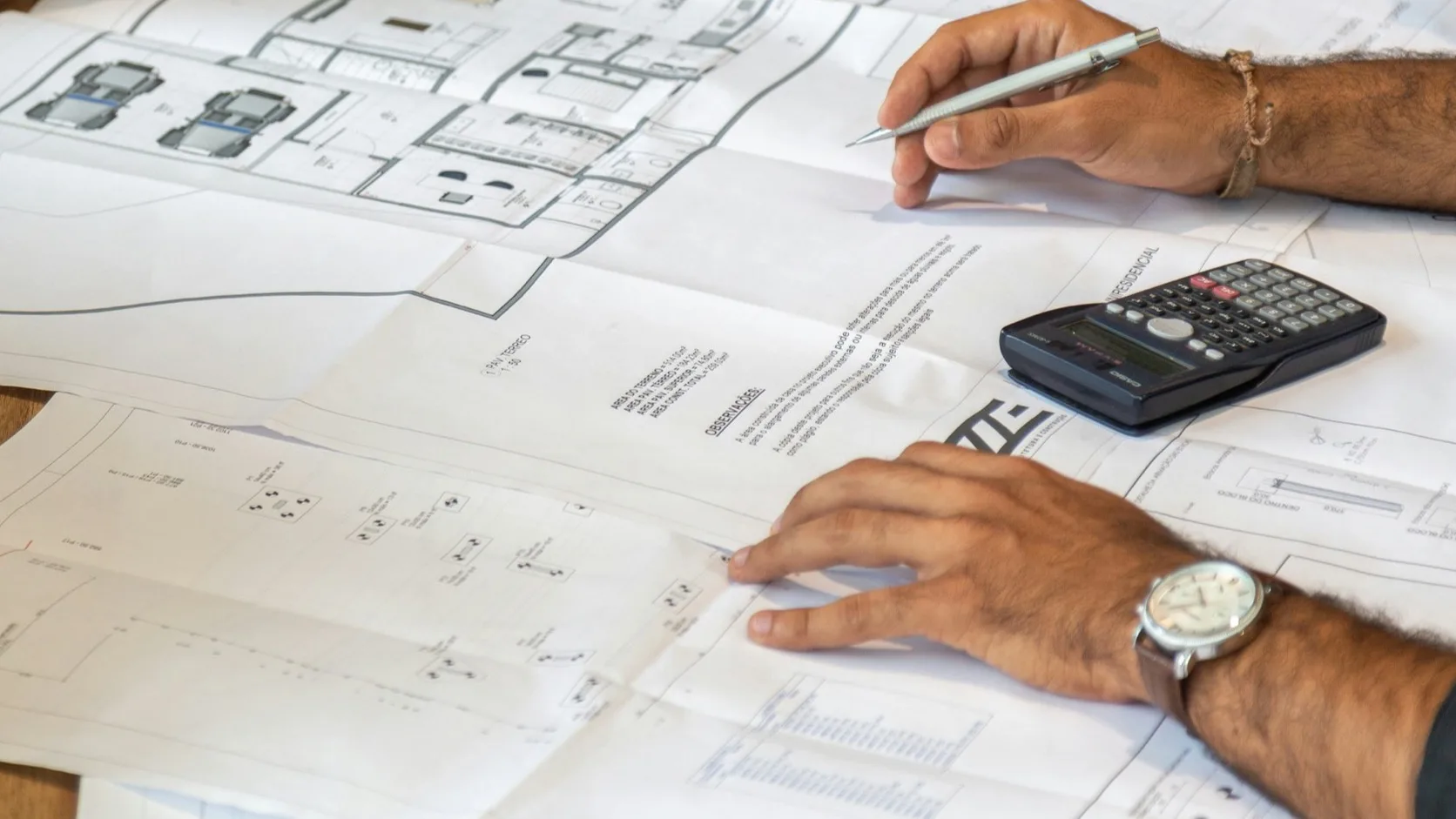
There is no useful per-square-metre price for KNX until the functions are defined. Two buildings of the same size can have very different circuit counts, user interfaces, HVAC integration, and commissioning effort.
The most reliable KNX cost estimate starts with a room-by-room function schedule. Product models come later. This avoids the common tender problem where one supplier prices basic switching while another includes dimming, feedback, visualization, and integration—and both quotations are presented as though they cover the same system.
The seven cost buckets
| Cost bucket | What it includes | Main quantity driver |
|---|---|---|
| Design and engineering | Functions, topology, group-address rules, panel drawings, sequences | Rooms, system interfaces, design maturity |
| Field devices | Keypads, sensors, thermostats, touch panels | User points and sensing zones |
| DIN-rail hardware | Actuators, power supplies, couplers, gateways | Controlled circuits, loads, lines, integrations |
| Electrical panels | Enclosures, terminals, protection, wiring, labels, assembly | Circuits, channel density, spare space |
| Software and commissioning | ETS work, addressing, parameters, scenes, testing | Devices, functions, revisions, travel |
| Third-party integration | BACnet, DALI, Modbus, PMS, AV, apps, BMS | Mapped points and interface complexity |
| Handover and support | ETS backup, as-built files, training, warranty response | Documentation level and service agreement |
A low hardware price can be offset by more cabinet labour, fewer diagnostic functions, weak documentation, or additional gateway programming. Compare the installed and accepted system, not only the product subtotal.
Build the estimate from functions
For each typical room, write what must happen. A hotel guest room, for example, may include:
- five switched lighting circuits;
- three dimmed circuits;
- curtain open/close control;
- fan-coil operating mode and setpoint;
- door, window, occupancy, and key-card inputs;
- bedside and entrance keypads;
- panel or thermostat display;
- PMS points for check-in and energy-saving state.
Multiply the approved typical room only after it has been coordinated with the electrical, interior, HVAC, and hotel teams. If the typical-room design is still changing, show that uncertainty in the budget rather than hiding it.
A practical estimating worksheet
| Line item | Quantity basis | Information needed before pricing |
|---|---|---|
| Switch outputs | Number of independently controlled circuits | Load type, current, feedback requirement |
| Dimming outputs | Circuits by dimming technology | Driver type, wattage, quantity, minimum level |
| Shading outputs | Motors and control groups | Motor type, interlocks, local/central functions |
| Sensor points | Detection and measurement zones | Presence, lux, temperature, humidity, CO2 |
| User interfaces | Locations and interface class | Button count, display, finish, language |
| Gateways | Protocol and subsystem | Point list, direction, update rate, responsibility |
| KNX lines | Topology and current calculation | Device count, bus current, areas, reserve |
| Commissioning | Devices plus test cases | Access dates, phased handover, witness tests |
The worksheet should separate quantity unknowns from unit-price unknowns. Quantity uncertainty is usually the larger early-stage risk.
What makes a KNX project expensive?
Late decisions
Moving a keypad after wall finishes, changing a luminaire driver after the dimmer order, or adding BMS points after gateway programming creates rework across trades. A design freeze is not bureaucracy; it is cost control.
Too many unique room types
Repeated rooms are efficient when the function, wiring, labels, ETS parameters, and test sheet can be reused. Ten nearly identical variants lose that advantage. Standardize where the user experience allows it.
Unclear integration boundaries
“Connect KNX to the BMS” is not a scope. The cost depends on point count, data direction, units, alarms, scheduling, trend requirements, network access, and which contractor proves each point.
Decorative user interfaces without a control strategy
A premium panel may be justified in a lobby or villa. Installing one in every service room is rarely good use of budget. Conversely, removing all local controls to save cost can make the building difficult to operate when a server or network is down.
Incomplete handover
An undocumented system is cheaper only until the first change. Reconstructing group addresses, passwords, and sequences costs more than delivering them correctly.
Value engineering that does not damage the system
Good value engineering reduces complexity while preserving control intent.
| Better saving | Risky saving |
|---|---|
| Standardize typical room functions | Remove status feedback from all outputs |
| Use the right channel density by panel | Load every relay to its headline rating |
| Put premium interfaces only where users benefit | Replace all keypads with one central touch panel |
| Reduce unnecessary integration points | Omit the agreed point list and price “one gateway” |
| Phase non-essential visualization | Remove spare panel space and bus-current margin |
| Create reusable ETS templates with final verification | Copy rooms without testing each installed circuit |
Sometimes a more capable actuator lowers total cost by reducing external timers, logic modules, or panel space. Sometimes a simpler actuator is more serviceable. Evaluate the whole panel and commissioning effort.
Why published price ranges often mislead
Product prices vary by country, distribution channel, certification, finish, taxes, freight, and project volume. Labour rates and site access can change the installed cost more than the difference between two actuator brands.
Instead of publishing a number that becomes stale, request three levels of budget:
- Concept budget based on room types and allowances.
- Design-development budget based on circuit and device schedules.
- Tender/contract sum based on coordinated drawings, point lists, test scope, and exclusions.
Each issue should show contingency and assumptions. When an assumption is resolved, move it into the measured scope rather than quietly consuming contingency.
Questions to ask when comparing quotations
- Are all suppliers pricing the same function schedule revision?
- Are cabinet components, terminals, protection, and wiring included?
- Is ETS licensing and the final editable project included?
- Are lighting scenes and HVAC sequences commissioned or only devices downloaded?
- How many third-party points are mapped and witnessed?
- Are travel, phased visits, night work, and retesting included?
- What documentation and training will the owner receive?
- Which load changes require a price revision?
Ask suppliers to state exclusions next to the relevant line item. A separate page of broad exclusions is easy to miss.
Lifecycle cost matters
KNX is generally selected as long-life building infrastructure. The cost discussion should include replacement availability, backwards compatibility, documentation, remote-support policy, cybersecurity maintenance, and the owner’s ability to appoint another integrator later.
A maintainable system may cost slightly more at installation but avoid vendor lock-in and repeated fault-finding. For owners, the final ETS file and accurate drawings have real financial value.
FAQ
Is KNX more expensive than conventional wiring?
It depends on the required functions. For basic ON/OFF control in a small area, conventional wiring may cost less. As scenes, centralized control, HVAC, shading, sensors, monitoring, and integration grow, compare complete functional systems rather than wiring methods alone.
Can KNX be budgeted per square metre?
Only as a rough early benchmark supported by clear assumptions. Circuit count, room functions, finish level, and integrations should drive the developed estimate.
What information is needed for a firm quotation?
Provide coordinated drawings, a circuit schedule, room function descriptions, user-interface schedule, panel requirements, protocol point lists, network scope, test procedure, and handover deliverables.
Where should contingency be held?
Hold it against unresolved scope: final lighting drivers, room variants, interface point counts, client scene decisions, and site phasing. Do not hide contingency inside unexplained device quantities.
Related engineering guides
- KNX total cost of ownership
- How to plan KNX lines and power supplies
- KNX cabinet layout best practices
- KNX documentation and handover checklist
A defensible KNX budget has a visible chain: rooms lead to functions, functions lead to points and circuits, those lead to hardware and engineering hours, and the final amount leads to measurable acceptance evidence.