
How Many Channels Should a KNX Actuator Have?
Choose the right KNX actuator channel count by balancing circuit quantity, load ratings, spare outputs, DIN space, failure impact, wiring, and serviceability.
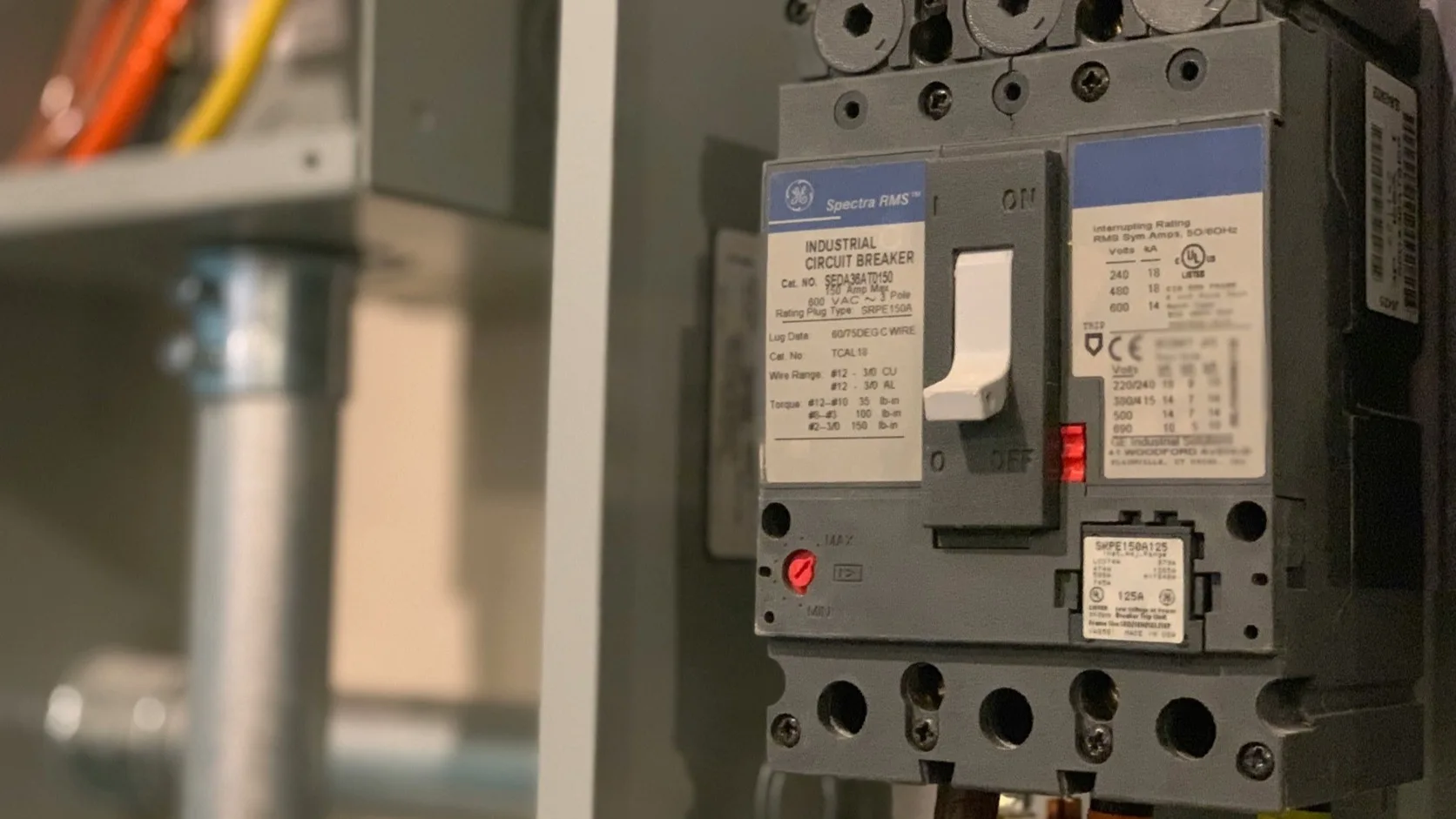
The right KNX actuator channel count is not automatically the highest number that fits on a DIN rail. High-density devices reduce module width and unit cost per output, but they also concentrate wiring, heat, and failure impact.
Start with the controlled circuits, separate them by load and operational importance, then package them into devices. This gives a design that can be explained and maintained.
Channel-count decisions at a glance
| Device size | Often useful for | Main trade-off |
|---|---|---|
| 4 channels | Small panels, special loads, distributed control | Higher cost and DIN space per channel |
| 8 channels | Apartments, hotel rooms, balanced cabinet groups | Good serviceability; moderate density |
| 12 channels | Medium panels with repeatable circuits | May fit schedules better than powers of eight |
| 16 channels | Commercial floors and centralized lighting panels | Efficient, but larger failure domain |
| 20–24 channels | High-density standardized loads | Terminal congestion and replacement impact need close review |
The range is illustrative. Actual actuator families differ in width, terminal arrangement, relay construction, manual controls, and ratings.
Step 1: count independent outputs
One independently switched circuit normally needs one switch channel. A blind or curtain motor commonly requires a purpose-built paired output with interlocking; it should not be counted as two ordinary lighting relays. Dimming, fan coil, valves, and 0/1–10V loads also need their correct actuator types.
Create a schedule like this:
| Circuit | Function | Load type | Required output | Criticality |
|---|---|---|---|---|
| L1 | Lobby downlights | LED drivers | Switch relay | Normal |
| L2 | Reception feature light | DALI | KNX-DALI gateway | Normal |
| M1 | South blind | 230 V motor | Blind channel | Normal |
| H1 | Electric reheater enable | Contactor coil | Switch relay | Controlled/safety reviewed |
| E1 | Escape-route normal lighting | LED drivers | Dedicated relay arrangement | Essential coordination |
Do not put unlike functions into one “channel total.” Ten lighting circuits plus two blinds are not simply fourteen identical relay outputs.
Step 2: apply load limits
The channel count printed on a device does not prove every channel can carry the scheduled load at the same time. Review:
- resistive and capacitive ratings;
- LED driver quantity and inrush;
- motor or inductive rating;
- common-feed or independent-feed terminal arrangement;
- total device thermal limits;
- conductor size and terminal current;
- derating in a warm cabinet.
An actuator with sixteen 16 A relays may still have product-specific limits on adjacent high-load channels or common terminals. Use the manual and the load schedule together.
Step 3: decide the spare strategy
A simple planning calculation is:
planned channels = installed independent circuits + approved future circuits + practical spare allowance
Spare policy should reflect the building. A private villa with stable room use may need less change capacity than a commercial floor that is repartitioned every few years.
| Spare approach | When it works | Limitation |
|---|---|---|
| Empty outputs on installed actuators | Small future circuit additions | Still needs terminals, protection, cable, and power capacity |
| Empty DIN space | Future function type is unknown | Later work needs shutdown and panel modification |
| Prewired spare channels | Repetitive tenant or hotel layouts | Higher initial panel cost |
| Separate expansion panel/section | Large phased project | Requires planned topology and feeder capacity |
Ten percent spare is a common discussion point, not a universal rule. Round the circuit schedule into maintainable device groups and state what the spare can actually support.
Step 4: control the failure domain
If one 24-channel actuator fails, how much of the building becomes unavailable? The answer depends on how circuits are grouped.
Avoid placing all of these on one device where the project can reasonably distribute them:
- every light in a single public room;
- all common-area lighting on one floor;
- all loads needed for night operation;
- all tenant and landlord circuits together;
- unrelated high-inrush loads that stress the same module.
Interleave or split circuits only when the labelling remains clear. Reliability should not create a cabinet that nobody can understand.
A worked example: 26 office lighting circuits
Assume an office floor has 26 switched LED circuits and needs four practical spare outputs.
Possible arrangements:
| Arrangement | Installed channels | Spare | Engineering comment |
|---|---|---|---|
| 2 × 16-channel | 32 | 6 | Simple BOM, moderate failure impact, easy stock spare |
| 1 × 24 + 1 × 8 | 32 | 6 | Dense main device; consider how circuits are divided |
| 3 × 12-channel | 36 | 10 | More space/cost, smaller failure domain |
| 4 × 8-channel | 32 | 6 | Strong separation and access; more DIN width and bus devices |
There is no mathematical winner. If the project standard stock is a 16-channel actuator and the cabinet has space, two identical devices may be easier to support. If the circuits serve separate tenants, more devices may improve isolation. If DIN width is severely constrained, the design problem may be the panel size rather than the actuator choice.
Cabinet details that change the answer
Terminal access
Twenty-four load conductors, feeds, neutrals, and field terminals create more work than the actuator width suggests. Draw the wire routes and bending space. Front-removable terminals and clear numbering are valuable.
Manual controls
Per-channel buttons and LEDs speed electrical testing. Confirm whether local operation remains available without an application download and whether manual states are reported.
Replacement method
Can the device be isolated and replaced without disturbing adjacent conductors? Are product databases, parameters, labels, and a tested spare available? A dense device is acceptable when replacement has been planned.
Bus traffic
More physical devices add bus participants, while one high-channel device may report many status and current values. Telegram-load design depends on reporting parameters, not only device count. Avoid periodic reporting that has no operational use.
Procurement checklist
| Check | Required evidence |
|---|---|
| Channel quantity and type | Circuit-to-channel schedule |
| Load capacity | Load-specific manufacturer table |
| Simultaneous operation | Thermal/derating limits |
| Feeds and terminals | Wiring diagram and conductor ratings |
| Feedback | Application-object list |
| Manual service | Local-operation description |
| Spare capacity | Marked panel and circuit schedule |
| Replacement | Stock strategy and ETS parameter backup |
Price the required number of usable channels. A cheap 20-channel actuator is not economical if four outputs cannot serve the scheduled driver groups or if cabinet labour rises sharply.
FAQ
Is a 16-channel actuator more reliable than two 8-channel actuators?
Not inherently. Reliability depends on product design and load. Two devices reduce the circuits lost in one device failure, while adding another device and set of connections.
Can spare channels be used for any future load?
No. The relay type, load rating, feed arrangement, protection, terminals, cable, and ETS functions must suit the new circuit.
Should critical circuits use a separate actuator?
Often they should be separated or distributed, but the full electrical and life-safety design governs the decision. KNX control must not replace required hardwired safety functions.
What is the best channel count for a hotel room?
It depends on the room function schedule and panel architecture. Repetition, local maintenance, blind/HVAC outputs, and spare-room strategy matter more than one standard number.
Related guides
- How to choose a KNX actuator
- KNX switch actuator selection guide
- DIN-rail KNX device selection
- KNX cabinet layout best practices
Choose channel count last, after circuit type, load evidence, spares, failure domains, and cabinet access are understood. The result may still be a high-density actuator—but now there is an engineering reason for it.