
KNX and Matter Integration: Roles, Gateways, and Limitations
Plan KNX and Matter integration with a clear gateway scope, datapoint mapping, feedback, security, acceptance tests, and realistic limits.
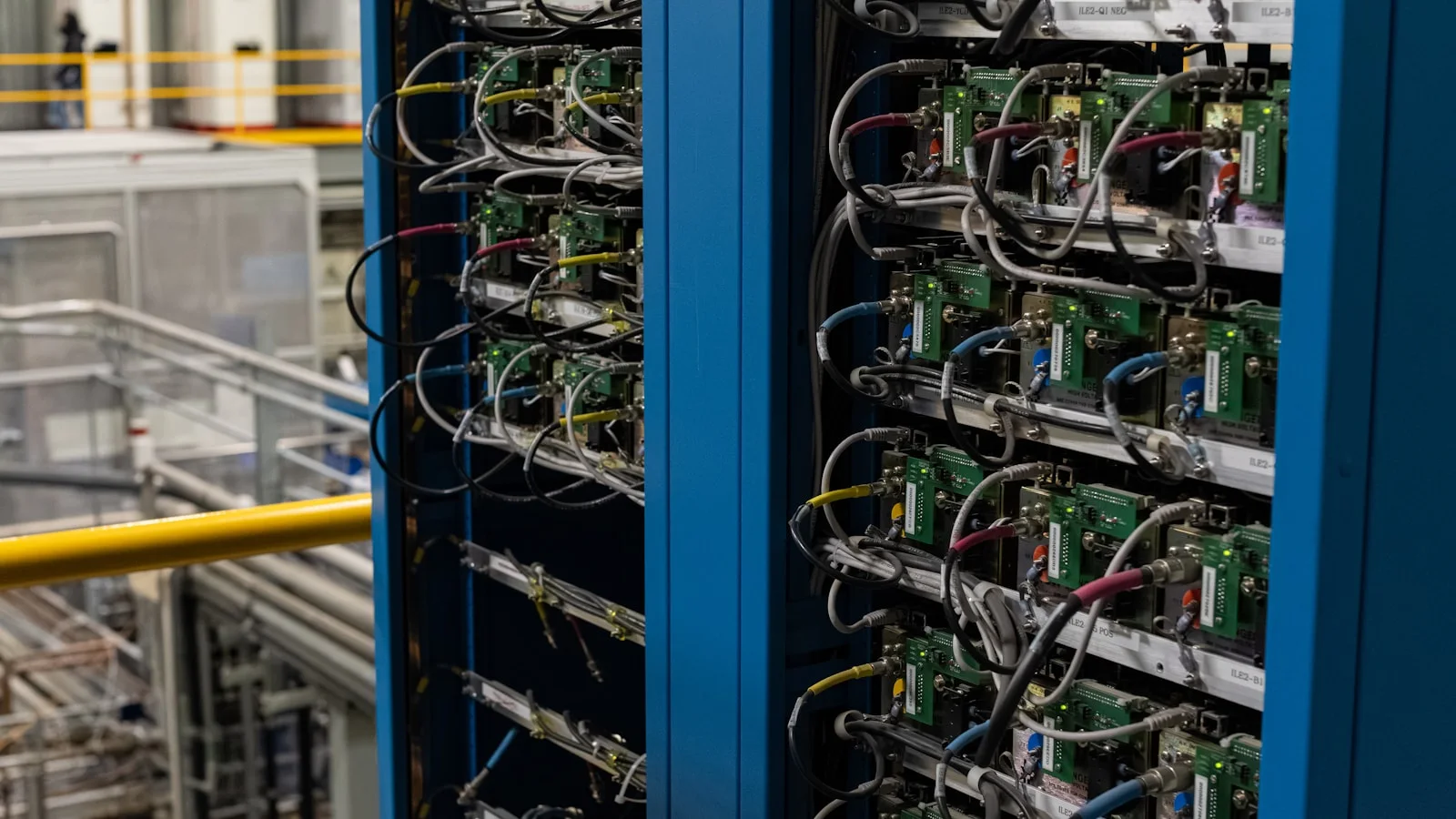
KNX and Matter do not replace one another. In a sensible design, KNX remains the building-control layer and a Matter bridge exposes selected KNX functions to consumer ecosystems such as Apple Home or Google Home. The bridge is a controlled translation point, not a reason to move every scene and interlock into a phone app.
That distinction saves a great deal of trouble later. A room should still switch, dim, heat, and shade correctly when the internet is unavailable or the homeowner changes ecosystem. Matter adds a familiar interface and cross-brand access; KNX continues doing the deterministic work in the building.
What each part of the system does
| Layer | Typical responsibility | Configuration owner |
|---|---|---|
| KNX field layer | Sensors, push buttons, actuators, room control, local scenes | KNX integrator in ETS |
| KNX-Matter bridge | Datapoint translation, device exposure, platform onboarding | Integrator or gateway specialist |
| Matter fabric | User accounts, rooms, app UI, voice control, consumer automations | Owner or appointed administrator |
| Optional BMS/server | Trends, alarms, schedules, portfolio logic | Facility or BMS team |
Matter runs over IP-bearing networks such as Ethernet, Wi-Fi, and Thread. KNX TP has its own twisted-pair bus; KNX RF is wireless; KNXnet/IP carries KNX telegrams over IP. Sharing an Ethernet switch does not make two application protocols interchangeable. A bridge still needs to understand both sides.
Start with the integration schedule, not the app
The gateway product page may say it supports hundreds of devices. That number is not a design. Before choosing hardware, prepare an exposure schedule.
| KNX function | KNX object/DPT | Matter representation | Direction | Required feedback |
|---|---|---|---|---|
| Living room pendant | 1-bit switch command/status | On/Off Light | Both | Actual actuator state |
| Living room pendant | 1-byte dim value/status | Dimmable Light level | Both | Actual dimming value |
| Bedroom temperature | 2-byte temperature | Temperature Sensor | KNX to Matter | Cyclic/change update |
| Bedroom setpoint | 2-byte setpoint | Thermostat setpoint, if supported | Both | Confirmed setpoint |
| South blind | move/stop and position | Window Covering | Both | Actual or calculated position |
| Away scene | scene trigger | Scene or virtual switch | Matter to KNX | Optional active-state logic |
The phrase “if supported” matters. A bridge may support lights and blinds well but expose only part of a room controller, fan-coil sequence, alarm object, or energy meter. Check the gateway’s current device-type and cluster list; do not infer support from a similar icon in the app.
Map a complete function
The most common bad integration maps only the command object. The light switches from the app, but its tile becomes wrong after a wall button, schedule, or KNX scene operates the actuator.
For a dimmed circuit, we normally look for at least:
2/1/1  Living Pendant / Switch Command
2/1/2  Living Pendant / Switch Status
2/1/3  Living Pendant / Dim Value Command
2/1/4  Living Pendant / Dim Value Status
The bridge should read status from the actuator or authoritative controller. It should not merely echo its own last command. The same rule applies to blind position, HVAC mode, setpoint, contact state, and alarm state.
Also check units and ranges. A KNX percentage is commonly represented as a scaled 1-byte value, while the Matter side presents a user-friendly percentage. Temperature mapping must preserve the sign, resolution, unit, and writable limits. A technically valid conversion can still be operationally wrong if the app allows a 30 °C cooling setpoint that the room controller later clamps to 24 °C.
Keep local logic local
A useful rule is: the function should live at the lowest layer that can execute it reliably and be maintained by the responsible team.
| Function | Preferred home | Reason |
|---|---|---|
| Push-button to light | KNX devices | Must work without gateway or app |
| Presence timeout | KNX sensor/controller | Room function, easy to test locally |
| Blind wind protection | Approved local control chain | Safety-related response must not depend on a consumer platform |
| Room scene | KNX actuator or room controller | Predictable recall and ownership |
| “Movie night” voice trigger | Matter command calling a KNX scene | Consumer convenience without duplicating scene values |
| Cross-brand appliance routine | Matter ecosystem | Appropriate when it includes native Matter products |
Avoid building the same logic twice. If KNX turns a light off after absence while a Matter automation turns it on based on a different occupancy source, the result is not redundancy; it is an argument between controllers.
Gateway selection questions that expose the real limits
Ask the supplier to answer these against the actual firmware version:
- Which Matter device types and optional features are supported?
- How many bridged endpoints, KNX group objects, rooms, and simultaneous fabrics are allowed?
- Can separate KNX command and status objects be mapped?
- Are KNX datapoint types interpreted explicitly or only as raw values?
- What happens after a power cycle, LAN outage, or controller removal?
- Is configuration backed up locally, and can a replacement unit restore it?
- How are firmware updates delivered and recorded?
- Can the owner remove one Matter fabric without wiping the KNX mapping?
- Which functions remain available if vendor cloud services are unavailable?
- Is the bridge listed as a KNX-certified device and, where claimed, Matter certified?
The official KNX product directory already includes devices described as KNX-to-Matter bridges. That confirms the product category is real, but it does not make every bridge equivalent. Endpoint capacity, object mapping, HVAC depth, commissioning workflow, and ecosystem behaviour still vary.
Matter version versus product implementation
As of this review, the Connectivity Standards Alliance has released Matter 1.6. The specification includes features such as Joint Fabric, capability reporting, and NFC-based commissioning. A bridge installed today may implement an earlier Matter version or only a subset relevant to its product.
Do not write “Matter 1.6 compatible” into a project specification unless the selected device vendor confirms it. A released standard, bridge firmware support, ecosystem support, and a deployed feature are four separate milestones.
Network and security design
Treat the bridge as part of both the building-control boundary and the IT network.
- Place it on an agreed VLAN or trusted residential LAN, not an undocumented spare switch port.
- Record IP addressing, DNS/NTP needs, permitted outbound services, and update method.
- Use KNX Secure where the threat model and device set require it; Matter security does not encrypt an unsecured KNX TP segment on the other side of the bridge.
- Keep recovery codes, Matter onboarding data, gateway backup, and ETS project in the handover package.
- Name the administrator for each Matter fabric. “The customer” is not an access-control plan.
- Decide whether remote vendor support is enabled, time-limited, or prohibited.
For commercial projects, consumer ecosystems may be unsuitable as the authoritative operating interface. They can still provide selected room convenience, but alarms, audit history, access control, and plant operation usually belong in systems with defined support and records.
Commissioning test sheet
Test from every control source, not only from the installer’s phone.
| Test | Expected result |
|---|---|
| Matter app sends ON/OFF | Correct KNX load operates; app shows confirmed state |
| KNX wall button operates load | Matter tile updates without reopening the app |
| KNX scene changes several loads | Every exposed endpoint reaches the new state |
| Dimming at minimum and maximum | Values track correctly with no scale inversion |
| Blind move, stop, and position | Direction and percentage agree on both systems |
| Gateway power cycle | Mapping returns without manual rebuilding |
| Internet disconnected | KNX local control remains normal; documented Matter functions behave as specified |
| LAN interrupted | No KNX control loop is lost; status recovers after reconnection |
| Second ecosystem added | Shared devices behave correctly and permissions are understood |
| Bridge removed from one fabric | Other authorized access and KNX functions remain as designed |
Run a soak test after the basic matrix. Intermittent stale states, duplicate names, rate limits, and delayed temperature updates often appear only after a day of ordinary operation.
Handover without creating a support trap
Deliver the ETS project, gateway export, object-mapping schedule, firmware versions, network record, fabric ownership list, recovery procedure, and acceptance results. Mark which app automations are owner-managed and which KNX functions are integrator-managed.
We also put a short note on every critical function: what continues to work if the bridge is removed? If the answer is unclear, the architecture is not finished.
FAQ
Can Matter devices connect directly to a KNX TP bus?
No. They need a compatible bridge or gateway that translates the application data. An Ethernet or Thread connection by itself does not understand KNX group addresses and datapoint types.
Does a KNX-Matter bridge make KNX IoT unnecessary?
No. KNX IoT is part of the KNX ecosystem and information model; Matter is a separate interoperability standard. They solve different integration problems even though both use IP technologies.
Should every KNX group address be exposed to Matter?
Usually not. Expose user-facing functions with clear device models and feedback. Keep diagnostic, safety, internal logic, and maintenance objects inside their appropriate engineering systems.
Will KNX still work if the Matter controller or internet fails?
It should, provided the KNX room functions were designed locally. Confirm this with an actual isolation test rather than relying on an architecture diagram.
Technical references
- Connectivity Standards Alliance, Matter 1.6 release and feature overview
- Connectivity Standards Alliance, Matter 1.0 architecture and supported IP transports
- KNX Association, KNX Bridge example in the certified device directory
- KNX Association, KNX IoT technology overview
- KNXmart, What is KNX IoT?
- KNXmart, KNX datapoint types explained
The integration is ready when the app is convenient, the status is truthful, ownership is documented, and the KNX installation remains a functional building system with the bridge unplugged.