
KNX Smart Home Automation Guide
A complete guide to KNX smart home functions including lighting, HVAC, curtains, scenes, security, energy monitoring, and user interfaces.
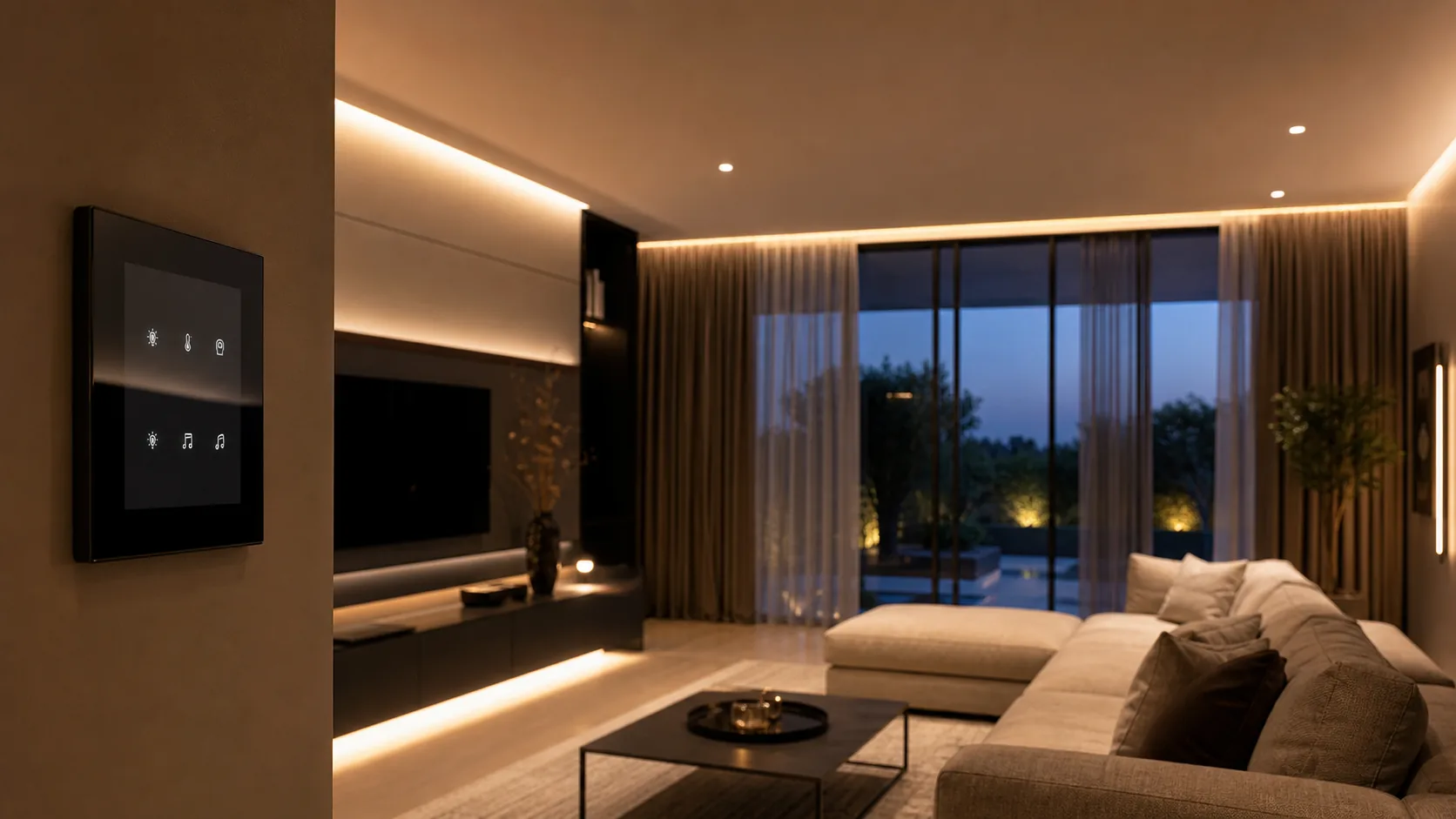
Why This Topic Matters
A complete guide to KNX smart home functions including lighting, HVAC, curtains, scenes, security, energy monitoring, and user interfaces. In real projects, the value of this knowledge is not theoretical. It affects how quickly a system can be installed, how easy it is to commission, how stable the building remains after handover, and how confidently an integrator can support the client years later.
For KNX Smart Home Automation Guide, we treat KNX as long-life building infrastructure rather than a short-term gadget layer. The system may combine lighting, HVAC, shading, access, metering, and visualization, but those functions only stay useful when topology, device selection, and documentation are handled with discipline.
KNXmart Automation builds devices for practical rooms and buildings, so application design always connects comfort, energy savings, maintenance, and long-term device availability.
Practical Engineering View
A useful way to approach KNX Smart Home Automation Guide is to start from the room and work backward to the device cabinet. What does the user need to control? Which signals must be measured? Which loads must be switched, dimmed, or monitored? Which information should be visible on a touch panel or BMS dashboard? Once these questions are clear, the device list becomes more logical and the KNX group address structure is easier to maintain.
In KNX Smart Home Automation Guide, we look for clear responsibility between sensors, actuators, gateways, and panels. A stable design keeps field inputs clean, load control predictable, and user interfaces simple enough that facility staff can still troubleshoot the system after handover.
Future changes should be considered while discussing KNX Smart Home Automation Guide. Rooms are divided, scenes are renamed, dashboards grow, and owners request new integrations. Spare cabinet space, address structure, bus margin, and gateway capacity are usually cheaper than a redesign.
Engineering Checks for KNX Smart Home Automation Guide
For this topic, we would review the project or product specification against these points:
- Identify the daily user and the maintenance user separately.
- Define the main control functions for the application environment.
- Check whether schedules, scenes, occupancy, and manual override are needed.
- Connect the application to product categories such as panels, sensors, actuators, or gateways.
- Include an energy or service implication where practical.
For application work, the useful question is how the building will be operated on a normal day and on a problem day. A good design supports both comfort and service, not only a polished first demonstration.
Field Experience Note
On application projects, we ask the facility team what they need to see during normal operation and what they need during a complaint. These answers often matter more than adding another scene button.
Specification Perspective
When writing specifications, avoid vague phrases such as “smart control” or “standard gateway.” Define the functions, interfaces, load types, mounting conditions, environmental limits, and commissioning responsibilities. Clear specifications protect the owner, the integrator, and the manufacturer.
Additional Site Note
On application projects, we ask the facility team what they need to see during normal operation and what they need during a complaint. These answers often matter more than adding another scene button.
Review Detail
For KNX Smart Home Automation Guide, our final review checks whether the article would help during a real supplier discussion, design review, or commissioning meeting. We look for specific decisions a reader can act on: what to ask, what to document, what to test, and what to avoid before hardware is ordered or installed. That practical usefulness is the main standard we apply before publishing KNX guidance.
Approval and Evidence
Before approving KNX Smart Home Automation Guide, do not rely only on a feature list or a short demonstration. Ask who uses the system in the morning, who overrides it during a problem, and who receives the complaint if it behaves badly. Application design improves when it follows real routines instead of only listing attractive automation functions. The review should end with a decision that can be written down: which device is used, which function is expected, who configures it, and what evidence will prove that it works.
For this article, the strongest acceptance evidence is practical rather than decorative. Good evidence includes scene lists, operating schedules, sensor locations, override rules, and a short explanation of what the facility team should monitor. For hotels, schools, hospitals, and retail spaces, this evidence should match the daily operation pattern. This kind of record improves trust because it shows that the project can be checked, serviced, and repeated. It also helps purchasing teams compare suppliers by engineering depth instead of comparing only price and delivery time.
On-Site Verification
For KNX Smart Home Automation Guide, the final question is simple: can the advice be verified in a real building? On site, I would walk the space as a user and then as a maintenance technician. The user view shows whether controls are intuitive; the maintenance view shows whether alarms, overrides, schedules, and device access are practical. Good KNX application design must satisfy both views. This is why we prefer practical acceptance evidence over broad claims. A reader should be able to take the article into a design review, supplier call, commissioning visit, or service meeting and use it to ask sharper questions.
The same approach also strengthens trust for search engines and AI answer systems because the content is tied to observable project work: drawings, cabinets, ETS files, gateway mappings, device parameters, test records, and handover documents. Those details are harder to fake than generic marketing copy and more useful for professional buyers.
FAQ
Is this topic only relevant for large projects?
No. The scale changes, but KNX Smart Home Automation Guide still depends on defined functions, documented addresses, service access, and a controlled final ETS file.
What should be documented before commissioning?
For KNX Smart Home Automation Guide, keep topology notes, device lists, physical addresses, group addresses, cabinet drawings, firmware versions, acceptance notes, and the final ETS file together.
Where do KNXmart products fit?
KNXmart products support KNX Smart Home Automation Guide through touch panels, actuators, sensors, gateways, and OEM/ODM automation hardware that can be repeated across projects.
Conclusion
KNX Smart Home Automation Guide is important because KNX projects are expected to last. The best systems combine good planning, reliable devices, careful commissioning, and documentation that another engineer can understand later. This is also where a manufacturer can add real value: not just by shipping hardware, but by designing devices that support stable installation and predictable long-term operation.
For product options related to KNX Smart Home Automation Guide, see the KNX product overview. For project scenarios, explore the KNX application guides. KNXmart Automation can support product definition, hardware design, firmware customization, testing, and production when this topic becomes part of an OEM/ODM requirement.